
A call to action
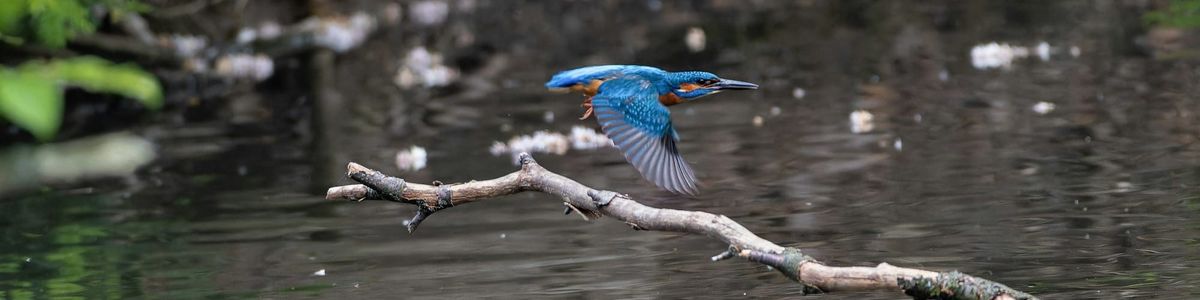
One of my earliest memories is of being with my grandfather (Jack) on the banks of the river Ilen in beautiful West Cork, Ireland, watching my father (Jim) who was standing in the river fishing for the seatrout and salmon that were there in such abundance at the time. A kingfisher flew along the far bank, low to the water. Jack, a great lover of the natural world, showed me this beautiful creature and explained how its colours appeared to change from orange to blue and back again, repeatedly, as the bird twisted and turned in its hunt for food. I imagined she'd return to a nest of hungry chicks. Whenever I catch caught sight of a kingfisher, I think of Jack and remember that time with fondness.
I inherited his love of the natural world and with it, his love of flyfishing. In the half-century since that precious moment, I've observed how stocks of trout and salmon have been critically diminished in a story that's been repeated across the globe.
A world transformed
It's hard to witness at times. Every sane person yearns for a recovery of the natural world, but it seems that something always gets in the way of near-term action at the scale that's required. We need to do a better job at understanding why this has occurred before we can solve the problem.
Mankind has successfully looked to science and technology in search of improvements to living conditions, life expectancy, food production, transportation, leisure, quality of life. These advancements have led to dramatic global population growth with far-reaching consequence.
Since the dawn of this millennium, the net additional population in that quarter century exceeds the entire global population in the year 1900. Improved life expectancy, reduced child mortality and a raft of productivity improvements have seen the global population almost quintupling in 125 years.
However, we clearly failed to account for the impact on the natural world of these developments. As food and energy provisioning sought to keep pace with population growth, mass industrialisation has driven our relationship with the planet completely out of kilter. Emissions, pollution, unsustainable harvesting of natural resources, damage to our watercourses and oceans - all man-made consequences of the drive for productivity – now combine to undermine the life quality and wellbeing of current and future generations.
Finding a better balance with nature is the most compelling challenge facing our generation. A sustainable future demands new paradigms for energy provisioning, food production and waste processing that respect and rehabilitate the natural world - in short, we need a new contract with nature!
Just as the climate crisis was brought to this point by many actions, compounded over a long time, improvements will come from a series of actions that combine to reverse the damage. Some will be large scale, policy driven initiatives driven by governments and major corporations. Smaller initiatives will have no less importance when deployed at scale. It is my view that every action, no matter how small, that tilts the balance in the right direction should be embraced, applauded and copied if possible. If much of the damage was suffered through a million ill-considered actions at the time, much of the remediation can come from small actions carried out by enough people.
I worked in the oil & gas industry as a young engineer, so I have a rap sheet too. I took far too long to act: to better insulate my house, to retire my fossil fuel devices, to switch to solar.
I'm a Johnny-come-lately to the energy transition who's looking to make up for lost time.
This blog is biased towards ideas and projects that make a difference – actionable, repeatable and effective initiatives. I hope to share data, learning and reflections that might inform and assist those of you looking to implement, invest or otherwise contribute in practical ways to the Energy Transition and the restoration of the natural world.